MAITE
Marine Protected Area
What is Maite Sanctuary like?
- Location: San Juan Municipality, Siquijor Island, Region 7
- Size: 6.3 hectares
- Established: in 2009
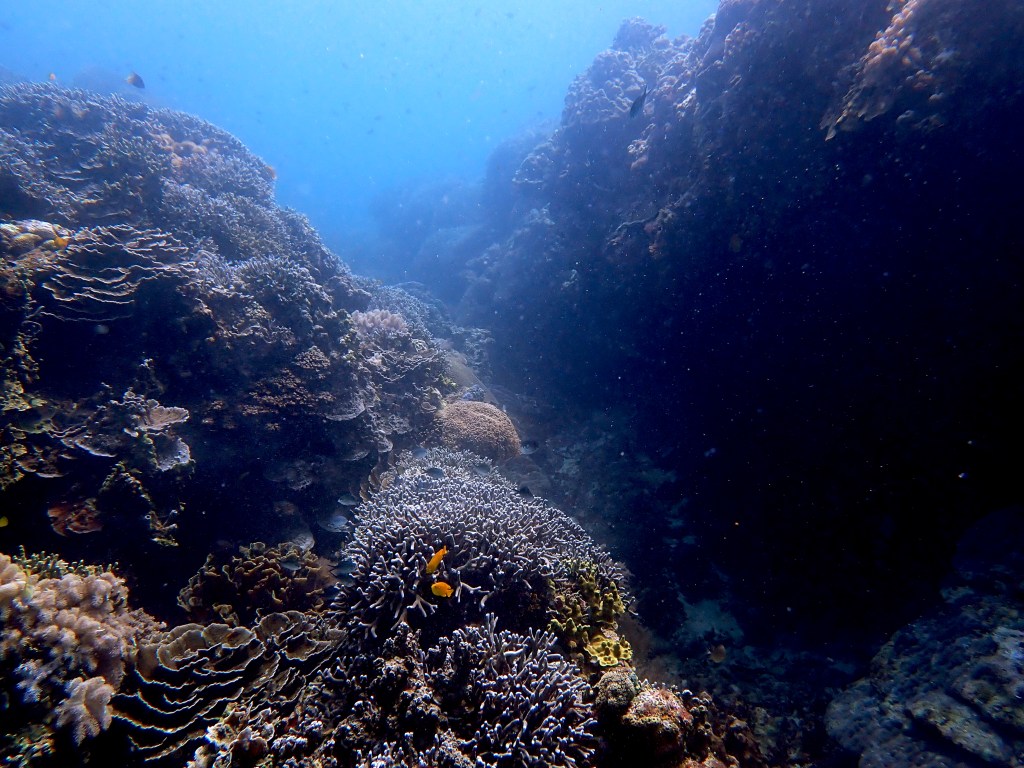
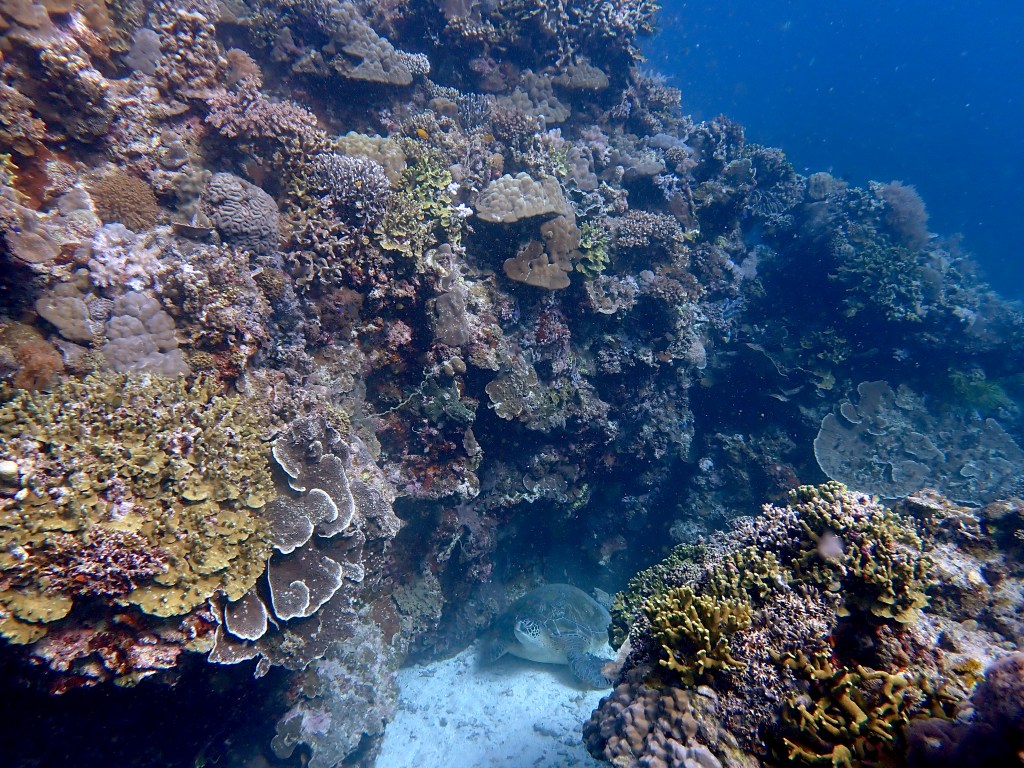
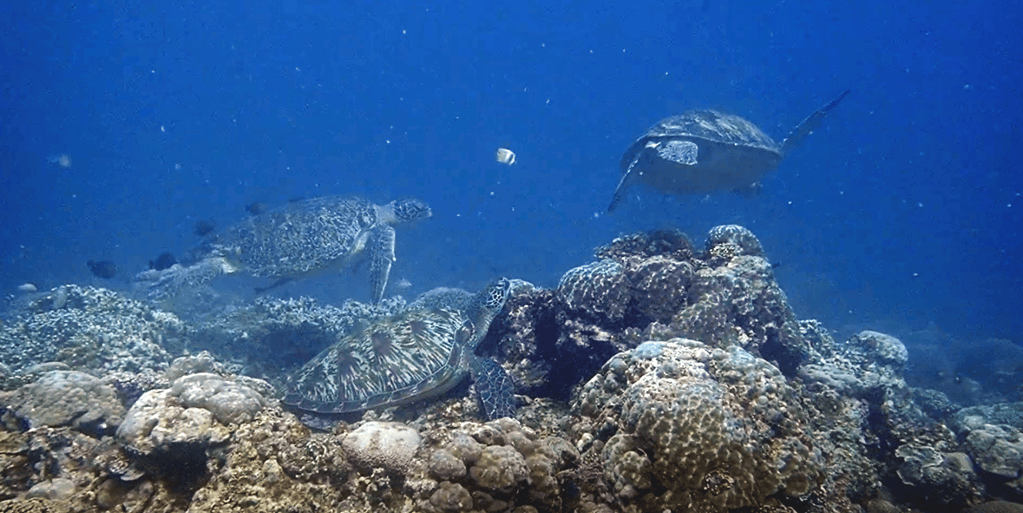
Maite Sanctuary is a 15 years old Locally-Managed Marine Protected Area (LMMPA)* located in the island of Siquijor in the Mindanao / Bohol sea. The sanctuary includes 6.3 hectares of marine ecosystem with large seagrass and algal beds from the extended flat portion in between 0 to 2 meter deep. They serve as nursery grounds for many marine organisms and feeding grounds for green turtles (Chelonia mydas). The dense coral reef starts at 2 meter deep, mixed with macro algae at first, then hard coral dominated from 3 to 15 meters deep. Despite its relatively shallow topography, the sanctuary offers spectacular sights for coral reef lovers. It is a site with dense, complex structures and high coral cover. Crevices, mounts and pinnacles can be found, giving maze-like impressions and complexity of structures and habitats.
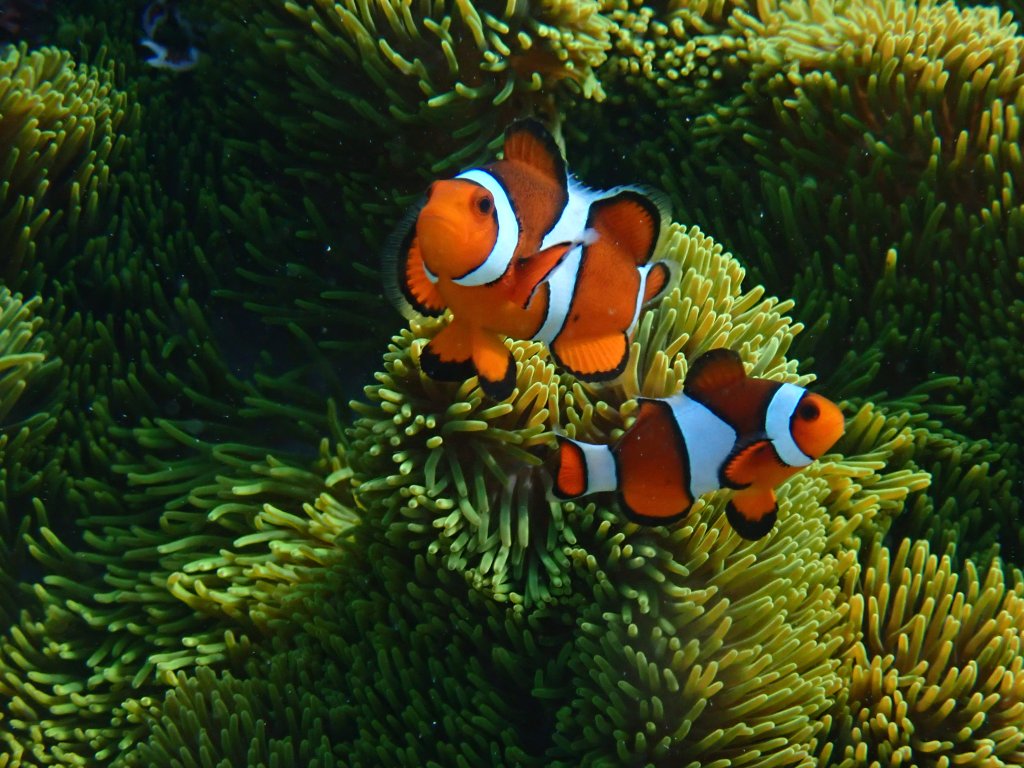
Different areas of the reef host various type of fish communities. Common sights include large schools of snappers ( especially the Midnight snapper – Macolor macularis), schools of fusiliers (Caesionidae), Blue Spine unicornfish (Naso Unicornis), Golden rabbitfish (Siganus guttatus), among many others. Anthias (Anthiadinae) gives vibrant colors to the reef, along with the many species of parrotfishes (Scaridae) grazing on algae and corals. Giant clams are a common sight, and sea turtles in high abundance (green turtles – Chelonia mydas and hawksbill turtle – Eretmochelys Imbricata). They have been witnessed to be nesting in front of the sanctuary.
Important note: Our research focuses on the coral reef portion only of the Sanctuary. The large seagrass and algal beds along with the sandy patches present in Maite Sanctuary were excluded from this data collection (Refer to our methodology: here). They are important habitats that work hand in hand with the reef portions and key to the success of the MPA for they are offering nursery grounds, food and transient shelter for many organisms. Any mention of sand, rock, algae, seagrass, in the later data is to be understood “within the reef area”.



Substrate in Maite Sanctuary
This part of our data is focused on the reef floor composition with a closer look at corals.
Substrate life form composition
Maite Sanctuary is a site with a dense, complex reef with high coral cover. Considering global accumulating pressures and facing the fact that less than 30% of coral reefs in the Philippines remains in “good” condition, the coral cover in Maite Sanctuary is an achievement in itself.
Results across the reef are showing an average of 54.5% Live Coral Cover* and 48.2% hard coral cover.
*Live Coral Cover or LCC is a common unit of measure including hard, soft and blue corals. Refer to reference below.
Gently pass over the graph to see the percentages appear.
A bit of reference?
The most commonly used coral reef ranking method in the Philippines is originating from the nationwide assessment of coral reefs from Gómez et al., published in 1981. In that study, the initiative sampled stations located mainly in the Luzon and the Visayas regions and classified them using a four-category scale based on live coral cover (LCC). As opposed to the general presentation of coral cover which focuses on Hard coral, Live Coral Cover (LCC) is defined as the total of soft and hard coral cover. Following that study, LCC was classified as following:
0-25%
POOR
>25-50%
FAIR
>50-75%
GOOD
>75%
EXCELLENT
The results showed that 434 of the 619 stations (70.1%) that were surveyed were in “poor” and “fair” condition and only 34 (5.5%) of the stations were in “excellent” condition. (1. Gómez et al. (1981), Status of Philippine Coral Reefs
Hard coral growth form composition
Gently pass over the graph to see the percentages appear.

Hard coral health
Gently pass over the graph to see the percentages appear.
Hard coral genus diversity
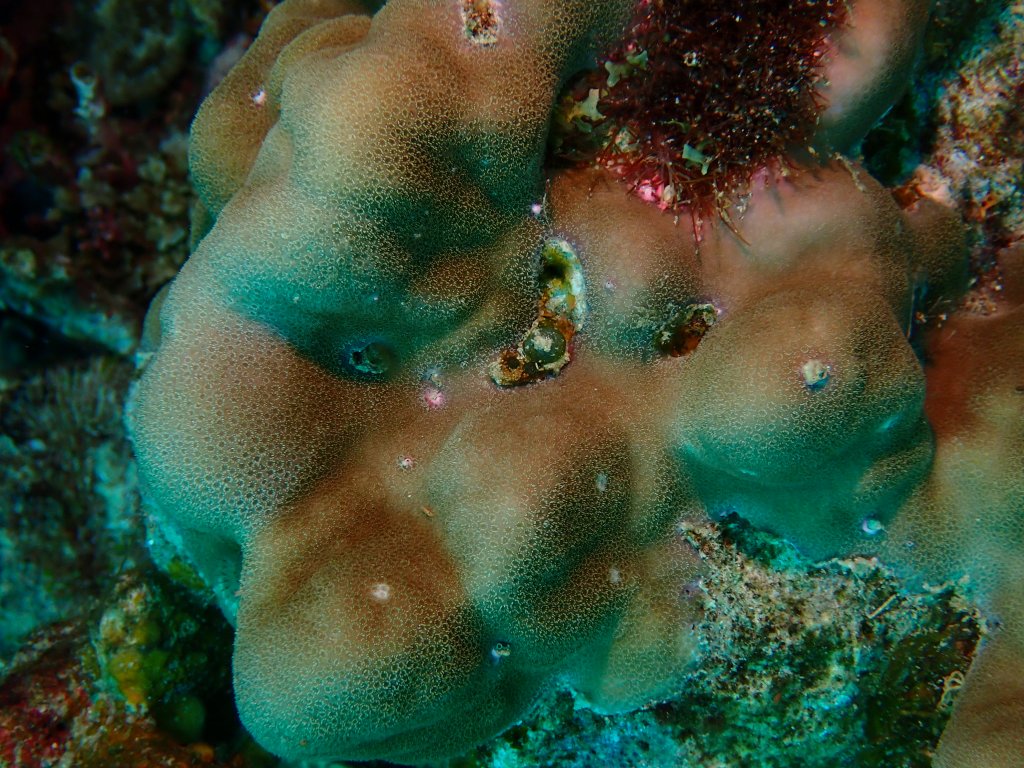
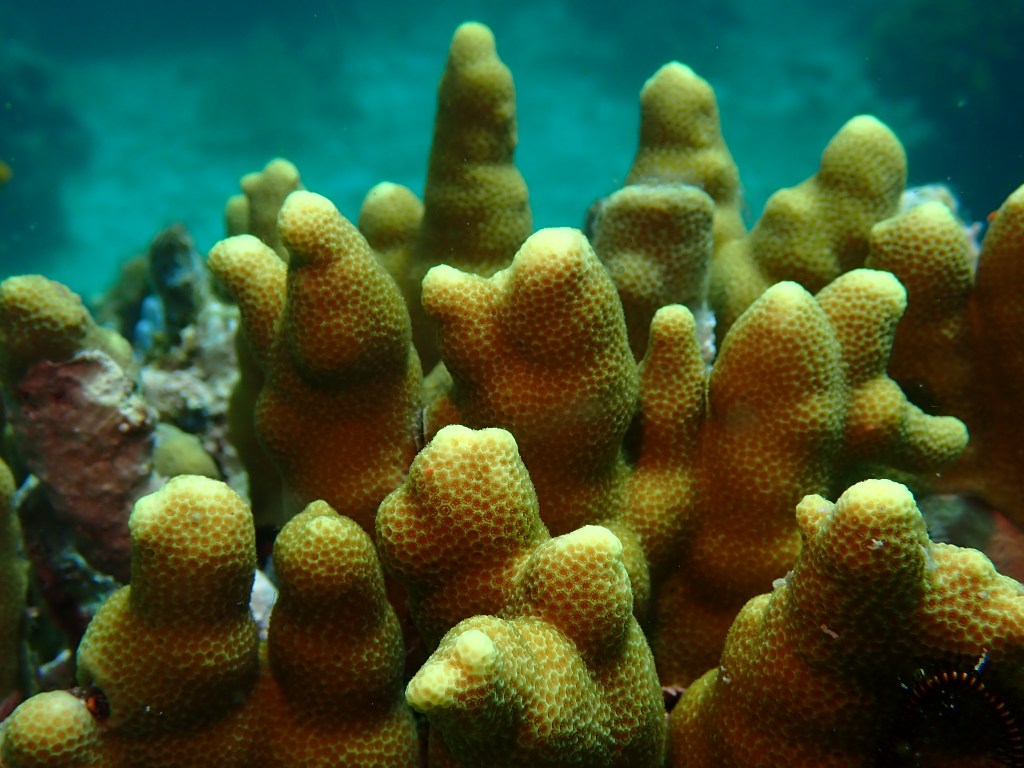
We have identified 56 hard coral genus present in Maite Sanctuary with a high abundance of Porites (especially in the shallow portions of the reef) Goniastrea, Coeloseris, and Diploastrea.

Gently pass over the graph to see the percentages appear.
Fish data in Maite Sanctuary
Fish abundance & diversity in Maite Sanctuary
While we do surveys, we cover areas of 100m2 of continuous reef (see methodology: here).
The average fish abundance is 790 per 100m2 of reef in Maite MPA. During the monitoring, 97 fish species belonging to 45 fish families were identified present in Maite Sanctuary. However, it is important to note that these fish were part of our target indicator species which is extensive but not all-inclusive at species level.
Gently pass over the graph to see the percentages appear.
Fish biomass in Maite Sanctuary
Given the species and sizes of the fish present in the survey site, we are able to calculate the biomass in kilos of the fishes per species, families or average at site level. Fish biomass is an important indicator of trophic structure and overall reproductive output of fish on the reef. Bayesian length-weight coefficients were computed using public data from fish base, at species level for the Philippines or closest location available in Asia.
The average fish biomass is 26kg per 100m2 of continuous reef in Maite with highest biomass recorded in the shallow portion of the reef.
Gently pass over the graph to see the percentages appear.
A bit of reference?
Studies suggest that minimum reef fish biomass targets should fall between 1,195 and 1,900 kg per ha (or 12-19 kg per 100m2) to help maintain sustainable reef fish populations and help maintain critical ecosystem services, food security, and resilience of coral reefs. This is however a minimum and a healthy coral reef should hold a much greater fish biomass per km2. As an indicator of a thriving reef protected from fishing in the Philippines usually taken as a proxy is Tubbataha Reefs National Marine Park with an average biomass of 100 to 200 metric tonnes per km2.
Of course, it is important to note that resources in place for the conservation of national parks are very different from the ones given to locally managed protected areas such as Maite. In the average Marine Protected Areas of neighbouring islands such as Negros Oriental, they average around 11 kg per 100m2.
When can we expect to read the full report?
2024 and 2025 reports are ready and available.
How about other sites?
Siquijor is a coralline island with high abundance and diversity of reefs along the coastal area. From forever flat fringing reefs, to steep walls, high current to sheltered bays, the island hosts reefs of very different ecologies, that are suitable to hosts different organisms. This is why there are so many Marine Protected Areas all around the island. Have a look at their results while we are monitoring them one after the other.
Questions?
You have any questions regarding our data collection? Would you like a copy of the report, the full media pack or information about the indicator list used? Feel free to contact us.
You would like to support our monitoring efforts?