
Sustainable tourism / half day workshop
Sustainable Tourism & Conservation
Can tourism protect the places people come to see?
Tourism can bring enormous benefits to local communities. It can create jobs, support businesses, generate income and provide funding and incentives for conservation. But tourism can also put pressure on the very environments that attract visitors in the first place.
More visitors can mean more waste, more water and energy use, more development, greater pressure on ecosystems and increasing demand for natural resources. So how do we make tourism work for both people and nature?
This half-day workshop introduces the principles of sustainable tourism, exploring the environmental, social and economic impacts of tourism and the different approaches that can help destinations become more sustainable.
Using real-world examples and practical workshop exercises, we’ll examine tourism’s relationship with coral reefs, beaches, forests, wildlife, local communities and natural resources.
Rather than asking whether tourism is “good” or “bad” for the environment, we’ll explore a more useful question: How can tourism be designed and managed so that destinations remain healthy, communities benefit and visitors can continue to enjoy them into the future?
The workshop is designed for both beginners and participants who already have some knowledge of environmental conservation.
Half day · Classroom workshop, theory + discussion · Small groups
What you’ll learn
By the end of this course, you will be able to better understand:
- Sustainable tourism — understand what sustainable tourism actually means and how it differs from simply promoting “eco-friendly” travel.
- Tourism’s environmental footprint — explore how tourism affects energy, water, waste, land, ecosystems and biodiversity.
- Carrying capacity — understand the concept of environmental and social limits to tourism growth.
- Overtourism — explore what happens when visitor numbers or tourism activities exceed what a destination can sustainably support.
- Coastal tourism — examine the relationship between tourism and coral reefs, beaches and other coastal ecosystems.
- Terrestrial tourism — consider how tourism affects forests, wildlife and terrestrial habitats.
- Local communities — understand why tourism sustainability must include the people who live in destinations.
- Responsible visitor behavior — explore how individual choices can reduce environmental impacts.
- Tourism businesses — identify practical ways hotels, restaurants, dive operators, tour companies and other businesses can reduce their footprint.
- Conservation & tourism — explore when tourism can contribute positively to conservation.
- Greenwashing — learn to critically evaluate environmental claims made by tourism businesses and destinations.
The goal isn’t simply to tell you to “travel responsibly.” It’s to help you understand what responsible and sustainable tourism actually looks like.
Your day with CRCP
This is a half-day session with classroom session and workshop / discussions. The exact start time may vary, so we will confirm the schedule for your selected date. Find an example of schedule below:
- 08:00 — CRCP Introduction
- Begin with an introduction of our organization, the environmental work that we conduct & team on the field.
- 08:15 — Classroom session – Part 1: Tourism and sustainability
- Begin with the fundamentals. What exactly is a sustainable tourism? Begin by unpacking a term that is used constantly but not always understood. We’ll introduce the three interconnected dimensions of sustainability:
- Environment: Protecting ecosystems, biodiversity and natural resources.
- People: Supporting local communities, culture, wellbeing and equitable opportunities.
- Economy: Creating viable businesses and livelihoods that can continue over the long term.
- Begin with the fundamentals. What exactly is a sustainable tourism? Begin by unpacking a term that is used constantly but not always understood. We’ll introduce the three interconnected dimensions of sustainability:
- 08:45 — Classroom session: Part 2: Tourism’s environmental footprint
- Tourism can create environmental impacts throughout the entire visitor journey, we’ll explore their source from
- indirect footprint (infrastructures, accommodation, restaurants, etc.)
- direct impacts (activities joined, food, transport, waste, behavior in the environment, etc.)
- Global impact of tourism on communities
- Global impact of tourism on nature (from coral reefs to caves, mountains and forests)
- Tourism can create environmental impacts throughout the entire visitor journey, we’ll explore their source from
- 09:15 — Classroom session: Part 3: Local impacts, carrying capacities & solutions
- In this last part, we’ll explore local impacts of tourisms, before discussing the concept of carrying capacities and dive into solutions to reconcile tourism and nature.
- 09:45 — Break
- 10:00 — Brainstorming, discussion, Creative workshop,
- We’ll take this time to discuss sustainable tourism, our experiences and what solutions we could implement individually. We will also play an interactive game to test our understanding of sustainable tourism. You’ll work through a series of real-world tourism scenarios and assess their sustainability. For each scenario, we’ll ask:
- Environment: What are the environmental impacts?
- People: How does the activity affect local communities?
- Economy: Who benefits financially?
- Management: What could be improved?
- Long term: Could this tourism model continue for 10, 20 or 50 years?
- Alternatives: You’ll then consider practical alternatives and discuss whether the activity could be redesigned to produce better environmental and social outcomes.
- Finally, we will ask you to work in in small groups, you’ll be given a hypothetical tourism destination and asked to identify its major sustainability challenges. You might need to address waste, water, energy, transport, infrastructures, coastal development, carrying capacities, local employment, community participation, environment & conservation. You’ll be tasked to design tourism, identifying the biggest pressures and prioritize the interventions that could have the greatest positive impact.
- We’ll take this time to discuss sustainable tourism, our experiences and what solutions we could implement individually. We will also play an interactive game to test our understanding of sustainable tourism. You’ll work through a series of real-world tourism scenarios and assess their sustainability. For each scenario, we’ll ask:
- 11:30 — Session end
- 12:00 — Plant based lunch & snacks
What is included?
Your course fee includes:
- Classroom learning – One classroom session covering theory and discussions
- Lunch & snacks – Plant-based lunch and snacks are included. Vegetarian and vegan options are available.
Course fee
| Format | Fee |
|---|---|
| In person theory + workshop | PHP 1,500 |
| Online – Theory only | PHP 1,500 |
A 20% deposit is required at the time of booking to secure your spot.
Filipino participants
Filipino participants receive an automatic 20% discount as a way to promote local participation. Simply let us know when you enquire so we can apply the discount.
CALENDAR /
Upcoming dates
We run this course in small groups to allow participants to receive close guidance from our instructors.
Classes are available on request, subject to instructor and field availability.
We recommend enquiring and reserving your place several weeks in advance.
The exact start time may vary, so we will confirm the schedule for your selected date.
In 2026
- On request
In 2027
- On request
Additional dates may occasionally be available, particularly for online participants. Contact us if you have a preferred date or need another option.
Small groups · Advance booking recommended
Places are limited and courses can fill quickly. Bookings close one month before each scheduled course date.
Learn from conservation practitioners
This course is delivered by our environmental NGO Coral Reef & Rainforest Conservation Project (CRCP), as a mean to promote environmental literacy and uplift the community of marine lovers in the Philippines with environmental skills and good practices.
Our training programs connect education with real conservation work. Rather than learning about coral reefs only from a textbook, participants are introduced to the ecological concepts, observation skills and conservation approaches used in the field.
You learn in the environment we are working to protect.
Your training support our conservation efforts
For CRCP, education is a critical part of our conservation work.
Through our learnwithCRCP programs, we share knowledge, develop practical conservation skills and encourage individuals to become more active stewards of the natural environment. Through this, we share our passion. Participation in our training programs also helps support and fund CRCP’s wider research, monitoring and conservation activities. It as well as a source of funding for our research & conservation efforts. By joining a CRCP course, you are not only investing in your own knowledge, you are helping us continue our work to better understand and protect our local ecosystems.
Learn. Explore. Understand. Protect.
FAQ
Do I need previous knowledge of sustainable tourism?
No. The workshop is designed as an introduction and does not require previous experience.
Is there a field trip? Does this course include scuba diving or snorkeling?
No. This is a classroom-based half-day workshop with interactive activities and discussion. You may combine it with a field activity that includes scuba diving or snorkeling if you wish, but this is additional, contact us.
Will we discuss tourism in the Philippines?
Yes. The Philippines and Siquijor context is used throughout the workshop to make the concepts relevant to the realities of island and coastal tourism.
Can this workshop be customized for a tourism business?
Yes. For tourism businesses, schools, universities or professional groups, CRCP can discuss adapting the workshop to your organization’s specific needs. Contact us with your requirements.
Can the course be arranged on a different date?
Yes. Classes are available on request, subject to instructor and field availability. We recommend contacting us several weeks in advance.
Can I combine this course with other CRCP training?
Yes. If you are interested in combining rainforest ecology with mangrove, coral reef, marine or other conservation training, contact us and tell us about your goals.
We can discuss how different courses could be combined into a broader learning experience.
Can i come alone or is this for groups only?
You can come alone absolutely, most of our participants do. But if you prefer joining with your friend or partner, that works too. Our sessions are organized in small groups only so that everyone meet and quickly feels comfortable.
Where is the course conducted ?
We host this field course in our base in Siquijor Island. It can also be conducted online.
Ready?
Schedule your training with us
Can tourism be part of the conservation solution?
Tourism depends on healthy destinations. Healthy destinations depend on healthy ecosystems and communities.
The challenge is making sure tourism contributes to protecting both.
Join our half-day workshop exploring how tourism can become more environmentally responsible, socially inclusive and economically sustainable.
Science-based · Practical · Conservation-focused
Our other conservation training programs
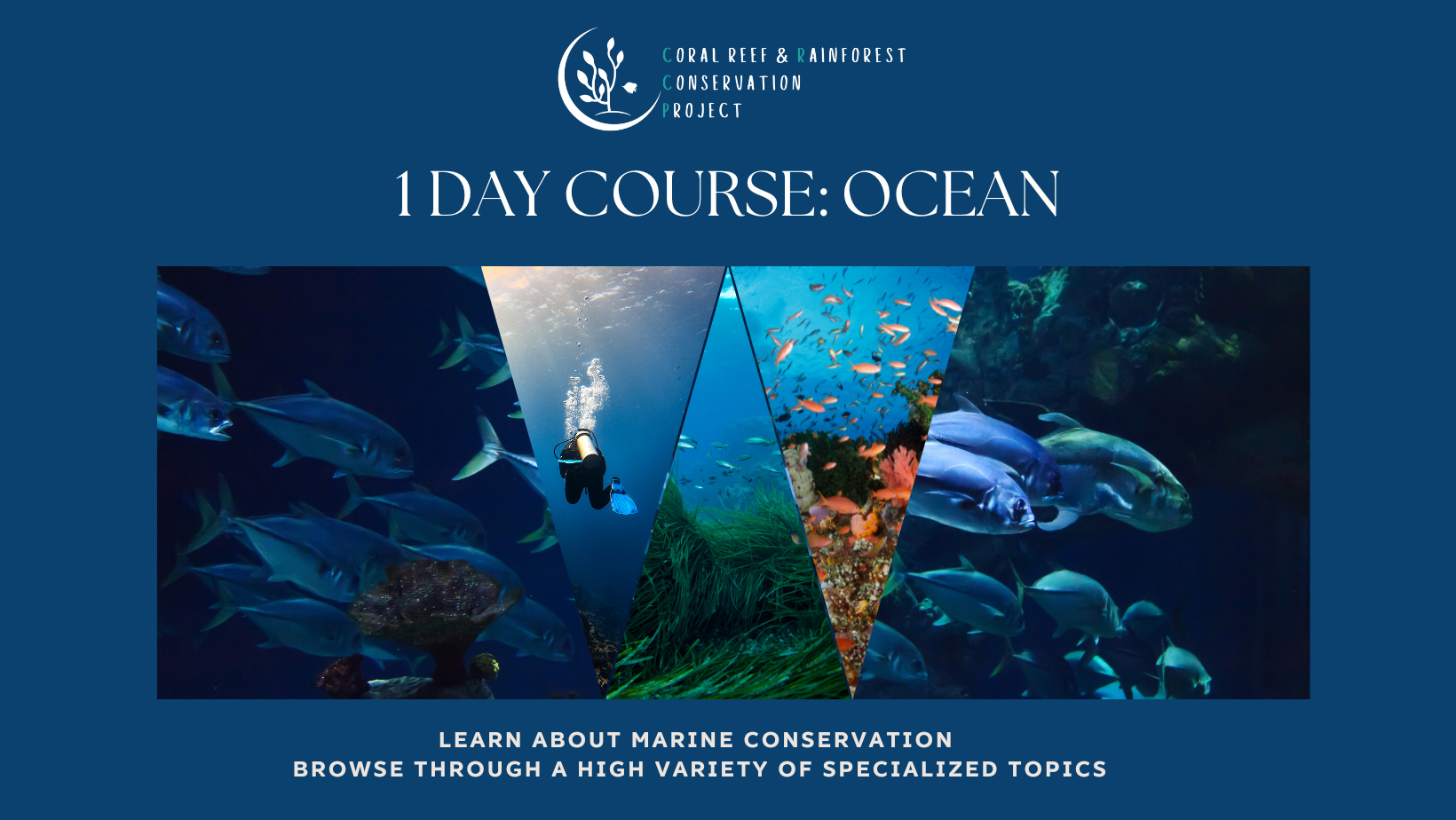
1 DAY CLASS:
MARINE OR TERRESTRIAL
Would you like to learn about marine or terrestrial ecosystems but you only have 1 day to spare ? This is for you. Pick and choose your preferred topic and come for an adventure. Each class is composed of 1 ecology and conservation lecture followed by field activity guided by one of our local expert. All levels welcomed!

1 WEEK PROGRAMS
Come immerse in environmental conservation for a 5 days / 6 nights with a team of experts on the field. Take a break from daily life, reconnect with nature, immerse in forests and pristine coral reefs and learn about how to protect them. We offer various types of 1 week programs, from broad to specialized.

LONGTERM & PROFESSIONAL COURSES (4wks min)
Are you interested in growing skills to take a bigger step from your daily life and actually help local scientific research and conservation work? Field work require skills but everything can be learned with time and efforts. If this is you, we offer long term development and mentorship programs.