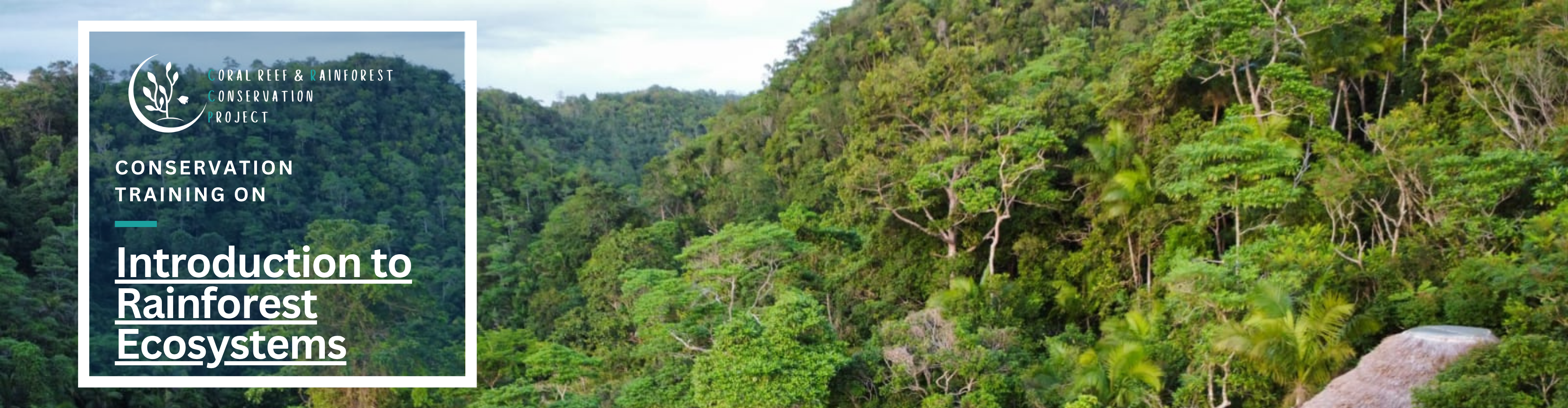
TERRESTRIAL ECOLOGY / 1 day field course
Introduction to Rainforest Ecosytems
Step into the rainforest and learn to read the forest.
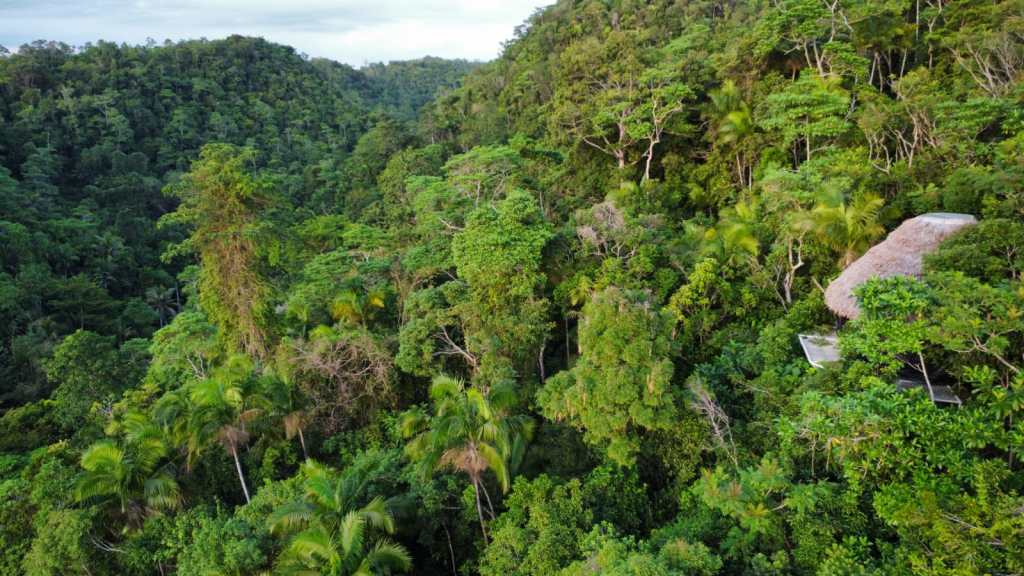
Tropical rainforests are among the most biodiverse ecosystems on Earth, supporting an extraordinary variety of plants, fungi, animals and microorganisms. But a rainforest is much more than a collection of trees. Every layer of the forest—from the canopy to the forest floor—contains interconnected communities shaped by light, water, soil, climate and the organisms that live there.
In this one-day introductory course, you’ll explore how rainforest ecosystems function, why they are so important, the threats they face and the conservation challenges affecting forests in the Philippines.
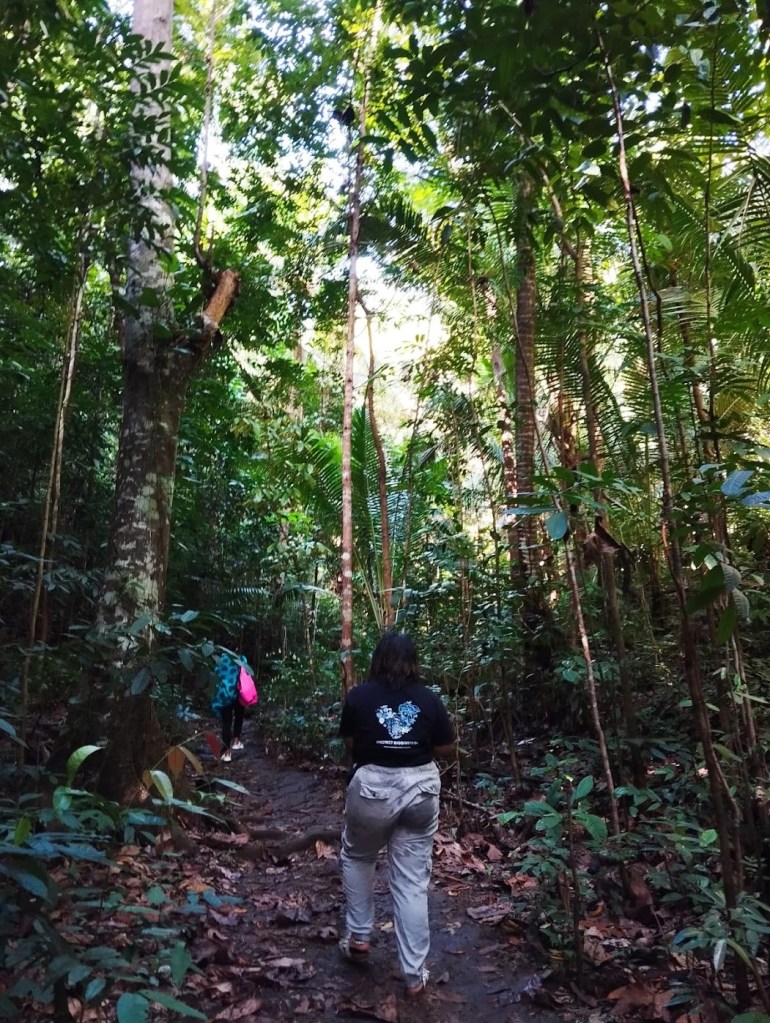
The classroom session is followed by a guided field excursion into our local forest, where you’ll develop practical observation and identification skills and learn to recognize native trees and other forest organisms.
1 day · Classroom + field learning · Guided forest excursion · Small groups
What you’ll learn
By the end of this course, you will have a better understanding of :
- Forest ecosystems — understand what defines a forest ecosystem and how its different components interact.
- Tropical rainforests — discover what makes tropical rainforests unique and why they support such exceptional biodiversity.
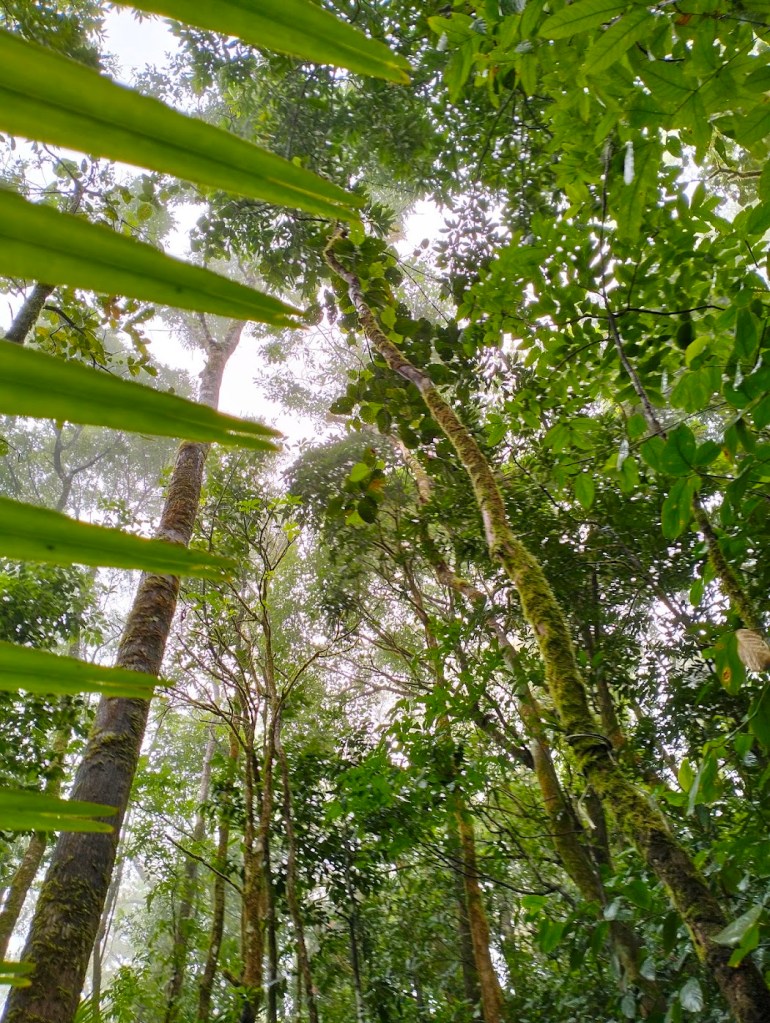
- Forest structure — explore the different layers of a rainforest, from the forest floor to the canopy.
- Forest biodiversity — learn about the plants, fungi, animals and microorganisms that depend on rainforest habitats
- Philippine forests — discover the country’s forest ecosystems, their importance and their current conservation status.
- Native and endemic species — learn about some of the remarkable species found in Philippine forests.
- Native tree identification — develop practical skills for recognizing common native trees using leaves, bark, growth form and other characteristics.
- Forest threats — understand the pressures affecting tropical forests, including deforestation, habitat loss and fragmentation.
- Forest conservation — explore approaches to protecting, restoring and sustainably managing forest ecosystems.
The goal is to help you move beyond simply walking through a forest and begin to understand what you are looking at.
Your day with CRCP
This field course is a 1 day session from 10am to 4pm with classroom session in the morning followed by a session in a local forest to complement the theory. Find below the approximate schedule:
- 10:00 — Classroom session
- Begin with an introduction of CRCP as an organization, the environmental work that we conduct & team on the field.
- Continue with the lecture exploring the fundamentals of forest and tropical rainforest ecology.
- You’ll learn what defines a rainforest, how these ecosystems function and why tropical forests are among the most biodiverse ecosystems on Earth.
- Explore the bigger picture of forest conservation including:
- Global forests : Where forests occur, how much remains and why primary forests are particularly important.
- Tropical rainforests: What makes tropical rainforests different from other forest ecosystems.
- Philippine forests: The diversity of forest ecosystems found across the Philippines and their current conservation challenges.
- Biodiversity: The extraordinary range of plants, animals, fungi and microorganisms that depend on forests.
- Forest threats: Deforestation, habitat loss, fragmentation and other pressures affecting tropical forests..
- 11:30 — Lunch
- Enjoy a plant-based lunch and snacks at base made by our chef before heading into the forest.
- 13:00 — Guided rainforest field excursion
- Put your knowledge into practice during a guided walk through a local forest ecosystem.
- Your instructor will introduce you to the forest’s structure and help you observe the plants and organisms around you.
- A major focus of the field session will be native tree identification. You’ll learn how to look at Leaves, barks, Trunks and branching patterns, Growth form, Fruits and flowers when present, Roots and other features, Habitat and surrounding vegetation.
- Rather than simply memorizing names, you’ll begin developing the observation skills needed to identify trees in the field.
- 15:30 — Debrief & Closing Remarks
- Debrief with your instructor about what you have learned during the day between theory to field excursion sessions, how confident you are with your skills and what are the next steps to keep building on this. Discuss what are the key takeaways from today and how to use them back home to support your own conservation journey.
- 15:00 / 15:30 — Course end
- The exact schedule and time may vary depending on the course date and field conditions. Transport sometimes takes a bit longer. We will confirm the final schedule when you book.

Learn about Philippine forests
The Philippines is recognized for its exceptional biodiversity, including many species found nowhere else in the world. But Philippine forests have also experienced extensive historical loss and degradation. Understanding the country’s forests therefore means looking at both sides of the story:
Exceptional biodiversity
The Philippines supports a remarkable diversity of plants and animals, including many endemic species.
Significant pressure
Deforestation, habitat conversion, fragmentation and other human pressures have transformed many forest ecosystems.
Conservation challenges
Protecting remaining forests while restoring degraded landscapes requires ecological knowledge, long-term management and collaboration with local communities.
During the course, we’ll explore where Philippine forests fit within the global picture and why protecting them matters.
Forests are more than trees
It is easy to walk through a rainforest and focus on the trees. But look closer…
There are fungi decomposing organic matter.
Insects pollinating flowers and recycling nutrients.
Birds dispersing seeds.
Epiphytes growing on branches.
Vines competing for light.
Mammals moving through the canopy.
Microorganisms interacting with roots and soil.
Every part of the forest is connected.
A rainforest is not simply a collection of trees. It is a living network of relationships.
Learn to identify native Philippine trees
Trees are some of the most important structural components of a rainforest, providing food, shelter and habitat for countless other organisms.
During the field excursion, you’ll be introduced to native trees and forest flora found in the local ecosystem.
Rather than relying on a single characteristic, you’ll learn how to combine different observations to narrow down an identification.
- Leaf shape and arrangement
- Bark and trunk characteristics
- Roots and root structures
- Flowers and fruits
- Habitat and growing conditions
- Ecological relationships
The goal is to give you the foundational observation skills and ecological knowledge to become more confident identifying trees and understanding the forest around you.
Conservation & restoration
From understanding to protection
Tropical forests face pressures from land conversion, logging, infrastructure development, agriculture, fragmentation and climate change. But conservation is not simply about protecting individual trees. Effective forest conservation requires us to understand:
- Protection: Why remaining natural forests are so important.
- Restoration: How degraded forests can recover and when active restoration may be appropriate.
- Native species: Why using appropriate native species matters when restoring forest ecosystems.
- Habitat connectivity: Why maintaining connections between forest areas is important for biodiversity.
- Community involvement: Why people living alongside forests are essential partners in long-term conservation.
- Monitoring: How ecological information can help us understand whether conservation and restoration efforts are working.
Conservation goal is not simply to plant trees. The goal is to protect and restore functioning forest ecosystems.
What is included in the course?
Your course fee includes:
- Classroom learning – One classroom session covering ecology of forest ecosystems, tropical rainforests, Philippine forests, biodiversity and conservation.
- Guided field excursion – A guided exploration of a local forest to complement the theory. Practical introduction to identifying native trees and other forest flora.
- Equipment – Snorkeling equipment and applicable marine fees.
- Lunch & snacks – Plant-based lunch and snacks are included. Vegetarian and vegan options are available.
Course fee
| Format | Fee |
|---|---|
| Theory + forest field excursion | PHP 2,500 |
| Online – Theory only | PHP 1,500 |
A 20% deposit is required at the time of booking to secure your spot.
Filipino participants
Filipino participants receive an automatic 20% discount as a way to promote local participation. Simply let us know when you enquire so we can apply the discount.
CALENDAR /
Upcoming dates
We run this course in small groups to allow participants to receive close guidance from our instructors.
In 2026
- September 11, 2026
- October 9, 2026
- November 13, 2026
In 2027
- January 15, 2027
- February 5, 2027
- March 5, 2027
Additional dates may occasionally be available, particularly for online participants. Contact us if you have a preferred date or need another option.
Small groups · Advance booking recommended
Places are limited and courses can fill quickly. Bookings close one month before each scheduled course date.
Learn from conservation practitioners
This course is delivered by our environmental NGO Coral Reef & Rainforest Conservation Project (CRCP), as a mean to promote environmental literacy and uplift the community of marine lovers in the Philippines with environmental skills and good practices.
Our training programs connect education with real conservation work. Rather than learning about coral reefs only from a textbook, participants are introduced to the ecological concepts, observation skills and conservation approaches used in the field.
You learn in the environment we are working to protect.
Your training support our conservation efforts
For CRCP, education is a critical part of our conservation work.
Through our learnwithCRCP programs, we share knowledge, develop practical conservation skills and encourage individuals to become more active stewards of the natural environment. Through this, we share our passion. Participation in our training programs also helps support and fund CRCP’s wider research, monitoring and conservation activities. It as well as a source of funding for our research & conservation efforts. By joining a CRCP course, you are not only investing in your own knowledge, you are helping us continue our work to better understand and protect our local ecosystems.
Learn. Explore. Understand. Protect.
FAQ
Is this course suitable for beginners? Do I need previous ecology or botany experience?
This course is designed as an introduction to rainforest ecosystems and is suitable for beginners.
Do I need to be physically fit?
The field excursion is designed as a forest walk, it is suitable for beginners but note that terrain can be uneven, muddy or slippery depending on weather conditions. A reasonable level of fitness and comfort walking outdoors is recommended. If you have mobility concerns or specific requirements, let us know before booking so we can discuss the field site and possible options.
Will I learn to identify trees?
Yes. A component of the course is developing native tree identification skills. You’ll learn to use characteristics such as leaves, bark, growth form and habitat to help identify trees in the field.
What trees will i see?
The exact species encountered will depend on the local forest site, season and natural conditions. The course focuses on native forest flora found in the local ecosystem rather than guaranteeing particular species.
Will we see wildlife?
The forest is a living ecosystem and wildlife is often encountered during the excursion. However, all animals are wild, and sightings cannot be guaranteed. Part of learning to explore forests responsibly is understanding how to observe wildlife without disturbing it.
What should I bring?
We recommend bringing:
- Comfortable outdoor clothing.
- Sturdy footwear suitable for uneven forest terrain.
- Sun protection.
- Natural Insect protection.
- Drinking water.
- A hat.
- Rain protection, particularly during wetter periods.
- A camera or binoculars if you wish to photograph wildlife.
We will provide more specific recommendations when confirming your course date.
What happens if it rains?
Rain is part of rainforest ecology! However, heavy rain or unsafe conditions may require us to modify the field itinerary or reschedule the excursion. We will prioritize participant safety and the protection of the forest environment.
Can the course be arranged on a different date?
Yes. Classes are available on request, subject to instructor and field availability. We recommend contacting us several weeks in advance.
Can I combine this course with other CRCP training?
Yes. If you are interested in combining rainforest ecology with mangrove, coral reef, marine or other conservation training, contact us and tell us about your goals.
We can discuss how different courses could be combined into a broader learning experience.
Can i come alone or is this for groups only?
You can come alone absolutely, most of our participants do. But if you prefer joining with your friend or partner, that works too. Our sessions are organized in small groups only so that everyone meet and quickly feels comfortable.
Where is the course conducted ?
We host this field course in our base in Siquijor Island. Regarding, the forest site, we pick the site depending on season and weather for the most favorable conditions.
Ready?
Schedule your training with us
Our other conservation training programs
1 DAY CLASS:
MARINE OR TERRESTRIAL
Would you like to learn about marine or terrestrial ecosystems but you only have 1 day to spare ? This is for you. Pick and choose your preferred topic and come for an adventure. Each class is composed of 1 ecology and conservation lecture followed by field activity guided by one of our local expert. All levels welcomed!

1 WEEK PROGRAMS
Come immerse in environmental conservation for a 5 days / 6 nights with a team of experts on the field. Take a break from daily life, reconnect with nature, immerse in forests and pristine coral reefs and learn about how to protect them. We offer various types of 1 week programs, from broad to specialized.

LONGTERM & PROFESSIONAL COURSES (4wks min)
Are you interested in growing skills to take a bigger step from your daily life and actually help local scientific research and conservation work? Field work require skills but everything can be learned with time and efforts. If this is you, we offer long term development and mentorship programs.