Mangroves
The world has lost 5 million hectares of mangroves over the last 20 years and is only now realizing the importance of these ecosystems.
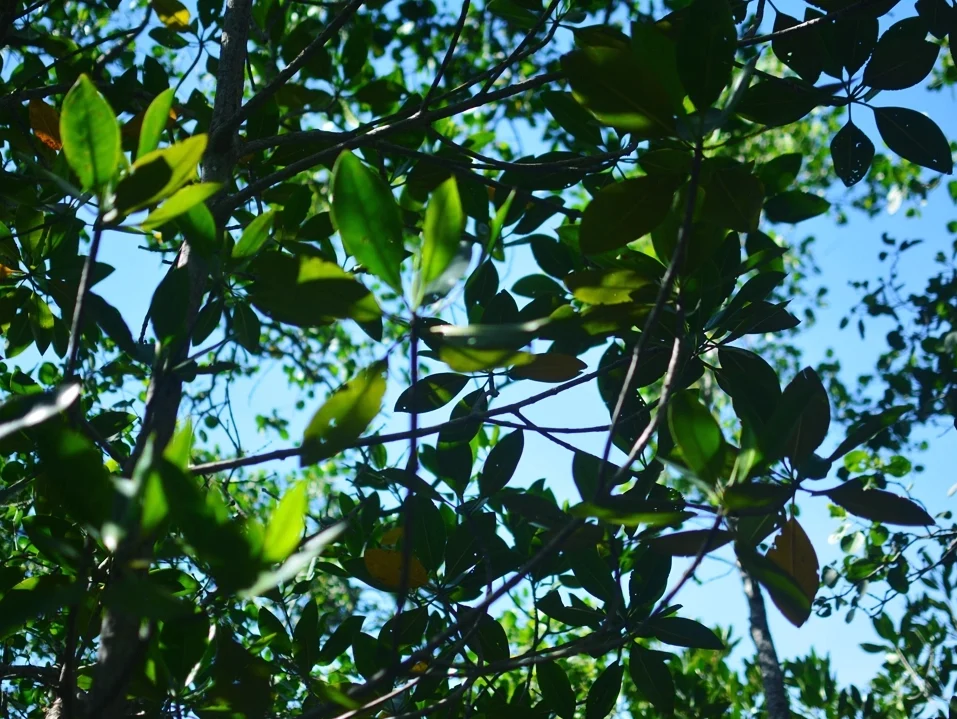
Mangroves are halophytic trees living in coastal areas. These trees have evolved to adapt and live in muddy brackish environments creating a coastal frontline between land and sea. They host extremely rich ecosystems, and offer breeding and nursery grounds for many marine and terrestrial organisms.
In the context of the climate crisis, mangroves have been highlighted for their ability and efficiency in removing and safely storing carbon dioxide (CO2) away from the atmosphere. Carbon stored in the plants and soil of coastal marine ecosystems is often referred to as “blue carbon,” and mangrove forests are some of the more efficient ecosystems on earth for stocking it. When mangroves are degraded or destroyed, their carbon is released as carbon dioxide and contributes to global climate change. Alternatively, when mangroves are healthy and thriving, they have the ability to remove and stock large quantities of CO2 per year, and release fresh clean oxygen instead.
Let’s protect Mangroves of the Philippines
The Philippines are rich with an important coverage of mangroves swamps and high species diversity. More than 50% of all mangroves species are present in the country with 47 “true mangroves” and associated species belonging to 26 families.
They serve as life support systems to about 75% of fish species caught in the area as well as to an indeterminate number of crustaceans and other wildlife (spawing, nursery, feeding grounds and transient shelter). They create a natural buffer between land and sea and have an important role in protecting each from the impacts of the other.
For a country such as the Philippines, where storms and typhoons are a common recurrence, mangroves play an essential part in protecting coastal communities by dissipating wave energy. Many also rely on it for food and livelihood.
Mangrove ecosystems have been recognized for their value as key marine habitats, coastal buffers and natural carbon sinks and are now protected since 1975 in the Philippines.
A threatened biodiversity
Unfortunately, deforestation has already heavily deteriorated the original mangroves cover of the Philippines, and only a small portion remains. Natural mangroves cover has declined between 50-80% of its original cover since pre-industrial times. Facing this emergency, conservation and reforestation efforts are being promoted. In 2021, the Forestry Management Bureau/Department of Environment and Natural Resources (DENR) estimated the total mangrove cover of the country to be 311,400 hectares source .
Despite the protected status of Mangroves in the Philippines, illegal logging, forest degradation and clearing is still a common issue, threatening these precious ecosystems.
Mangrove forests provide invaluable services and resources to coastal communities, and are important habitats and breeding grounds for many species. It is important to keep enforcing their protection and support reforestation efforts, giving space and a helping hand to nature to rebuild and regrow.
Our work
CRCP is working on understanding how interactions between people and forests can be beneficial for the conservation of species and habitats, as well as favoring local communities.
This includes studying mangrove biodiversity and abundance in our project areas, as well as conducting research on perception and use of the resources and services provided by these ecosystems to their nearby coastal communities. We focus our reforestation efforts in damaged and critical areas, and organize educational and outreach activities to promote the conservation of such precious ecosystems.
Our projects
ONGOING PROJECTS
The page is being currently being created, please be patient for more information on our conservation projects. Feel free to contact us in the meantime.
Latest related news by CRCP
TAKE ACTION FOR THE ENVIRONMENT
More of our work


Question? Reach us by email at:
contact[@]coralreefandrainforestconservationproject.org